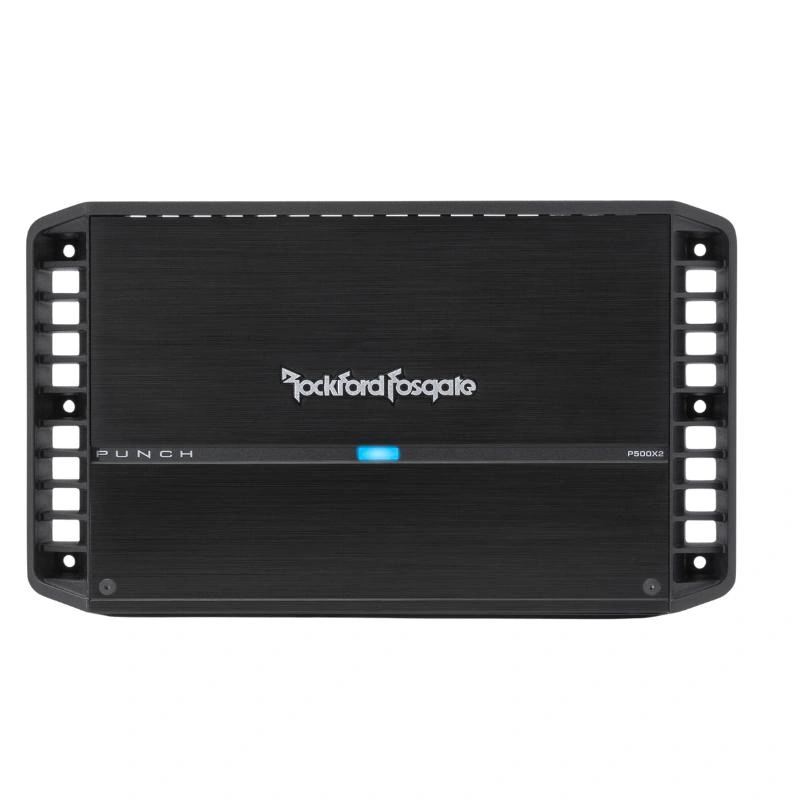
Not every build needs four channels. If your plan is front component speakers with the option to bridge for a single sub later, a dedicated 2-channel amp does that job without paying for capability you won’t use. The Rockford Fosgate P500X2 is built specifically around that use case, and it solves a wiring headache most budget amps don’t — accepting speaker-level input directly from a factory deck without a separate converter box. This Rockford Fosgate P500X2 review covers what that actually means for installation, what the amp really outputs, and whether two channels is the right call versus something like the Pioneer GM-A6704 or Kicker 46CXA800.1.
- Specs at a Glance
- Why This Amp Skips the Line-Output Converter
- Real Power Output
- Two Roles in One Amp — Speakers or a Bridged Sub
- Wiring, Fusing & the Optional Remote Level Control
- Punch EQ2 and the C.L.E.A.N. Setup System
- Rockford vs Pioneer vs Kicker — Which Channel Count Do You Need?
- Pros & Cons
- Final Verdict
- FAQ
Specs at a Glance
| Spec | Detail |
|---|---|
| RMS Power | 150W x2 @4Ω / 250W x2 @2Ω / 500W x1 @4Ω (bridged) |
| Class | Class A/B |
| Standard | CEA-2006 compliant |
| Frequency Response | 20Hz–20kHz ±1.0dB |
| Filters | 12dB/octave Butterworth crossover, Punch EQ2 |
| Max Current Draw | 80A @ 13.8V |
| Dimensions | 2.38″ x 7.76″ x 13.28″ |
Why This Amp Skips the Line-Output Converter
Wiring an aftermarket amp into a factory stereo usually means adding a line-output converter — a small box that steps a speaker-level signal down to RCA level so the amp can read it. It’s an extra part, an extra point of failure, and an extra thing to troubleshoot if something sounds off later.
The P500X2’s RCA inputs are built to accept both high-level and low-level signal directly, paired with an auto turn-on circuit that senses when the factory deck powers on. That combination means a factory-stereo install can skip the converter entirely — plug the speaker wires in, and the amp handles the rest. For anyone upgrading a stock system without swapping the head unit, this removes a step that trips up a lot of first-time installs.
Real Power Output
Rockford’s numbers are CEA-2006 certified, meaning they’re measured at a fixed voltage and distortion threshold rather than a best-case peak figure: 150W RMS per channel at 4Ω, 250W at 2Ω, and 500W bridged into a single 4Ω subwoofer. Those figures hold up under sustained load rather than sagging as the amp warms up, which is the more common failure point in amps that publish similarly aggressive numbers without the same testing standard behind them.
Two Roles in One Amp — Speakers or a Bridged Sub
Run in stereo, the P500X2’s 150W per channel comfortably drives a set of component speakers with real headroom over stock power — enough to notice a difference in clarity at moderate-to-loud volume, not just a bump in loudness. Bridge the two channels together and it becomes a 500W monoblock, enough for a single daily-driver subwoofer without needing a second amp in the trunk.
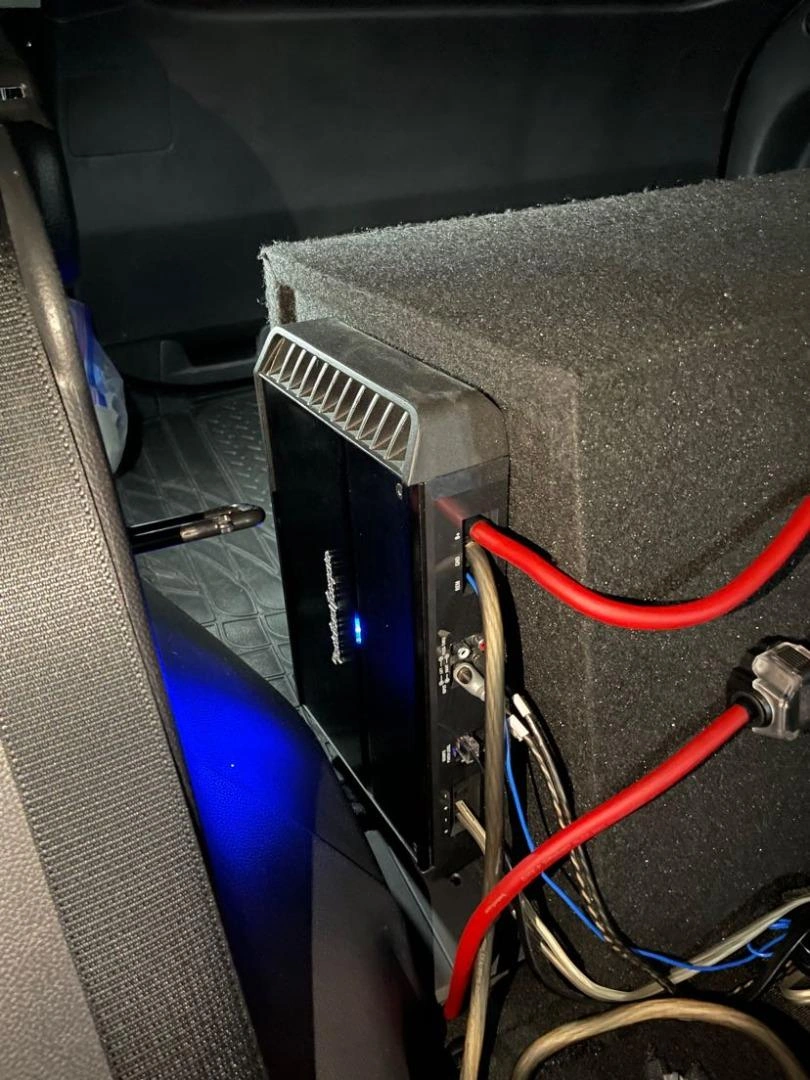
That flexibility is the whole appeal of a 2-channel amp over a monoblock — you’re not locked into one job. If your build later shifts from speakers-only to speakers-plus-sub, the P500X2 doesn’t need to be replaced, just rewired.
Wiring, Fusing & the Optional Remote Level Control
An 80-amp max current draw is on the higher side for a 2-channel amp this size, and it’s worth taking seriously rather than skimming past. Rockford specifies 4-gauge power and ground wire with an 80-amp fuse near the battery — undersizing either one is the most common reason an amp like this runs hot or trips its protection circuit under load, even when everything else is wired correctly.
If you want gain control from the driver’s seat rather than reaching into the trunk, Rockford sells the PLC2 remote level control as a separate accessory — a dash-mountable knob with a dual-function LED that shows power and clipping status. Worth knowing before buying one: it only adjusts level when the crossover is set to low-pass, which means it’s genuinely useful in the bridged-sub configuration but does nothing if you’re running the amp in stereo for speakers.
Punch EQ2 and the C.L.E.A.N. Setup System
Punch EQ2 adds up to 18dB of bass boost at 45Hz, which is enough to add real low-end presence to a component speaker setup without needing a dedicated sub — useful if your build stays 2-channel long-term. The 12dB/octave Butterworth crossover handles the high-pass and low-pass duties for whichever configuration you’re running.
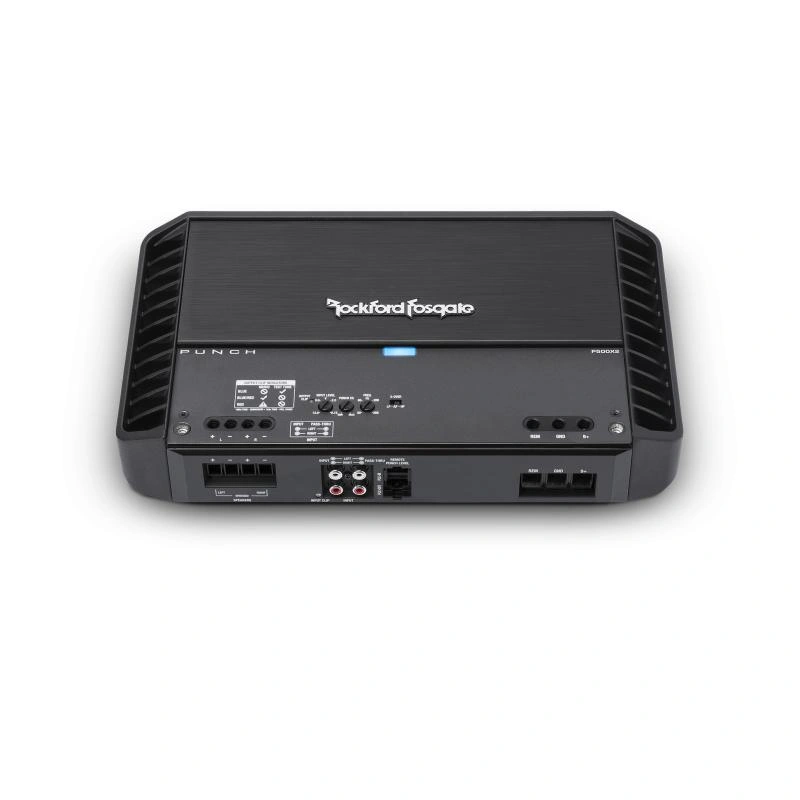
Rockford’s C.L.E.A.N. setup system is worth using rather than skipping — it’s a set of test tones (available as a free download) that walk you through setting gain by ear or with a multimeter, rather than guessing. Installers new to gain-staging benefit from this more than the feature list suggests; incorrect gain setup is the most common reason a correctly wired amp still sounds distorted.
Rockford vs Pioneer vs Kicker — Which Channel Count Do You Need?
Against the Pioneer GM-A6704, the decision is really about channel count. The Pioneer’s 4 channels cover speakers and a bridged sub simultaneously from one amp; the Rockford’s 2 channels do one job at a time — full stereo or bridged mono, not both together. If your build genuinely needs both running concurrently, the Pioneer is the better fit.
Against the Kicker 46CXA800.1, the comparison only makes sense if you’re specifically weighing a bridged 2-channel amp against a dedicated monoblock — the Kicker will out-power the Rockford in bridged mode and adds genuine 1-ohm stability, but it can’t drive stereo speakers at all. The Rockford’s advantage is doing both roles reasonably well rather than one role exceptionally.
Pros & Cons
- ✅ Accepts speaker-level input directly — no line-output converter needed for factory integration
- ✅ CEA-2006 verified power — no inflated marketing numbers
- ✅ Genuinely flexible — runs stereo speakers or bridges to a single sub
- ✅ C.L.E.A.N. setup system simplifies gain tuning for first-time installers
- ❌ Class A/B design runs warmer than a comparable Class D amp under sustained load
- ❌ Can’t run speakers and a sub at the same time — pick one role per install
Best Alternatives to Consider
- Pioneer GM-A6704 — 4-channel flexibility if you need speakers and a sub together
- Kicker 46CXA800.1 — dedicated monoblock power if bridging is your primary use
- Alpine S-A60M — compact monoblock alternative for tight sub-only installs
Final Verdict
The Rockford Fosgate P500X2 earns its place by doing exactly what a 2-channel amp should — clean, verified power for component speakers, with the option to bridge for a sub without buying a second amplifier. It’s not the right pick if your build needs speakers and a sub running at the same time; a 4-channel amp handles that better. But for a build that’s genuinely either-or, this is a dependable, well-built choice backed by Rockford’s testing standards rather than inflated spec-sheet claims.