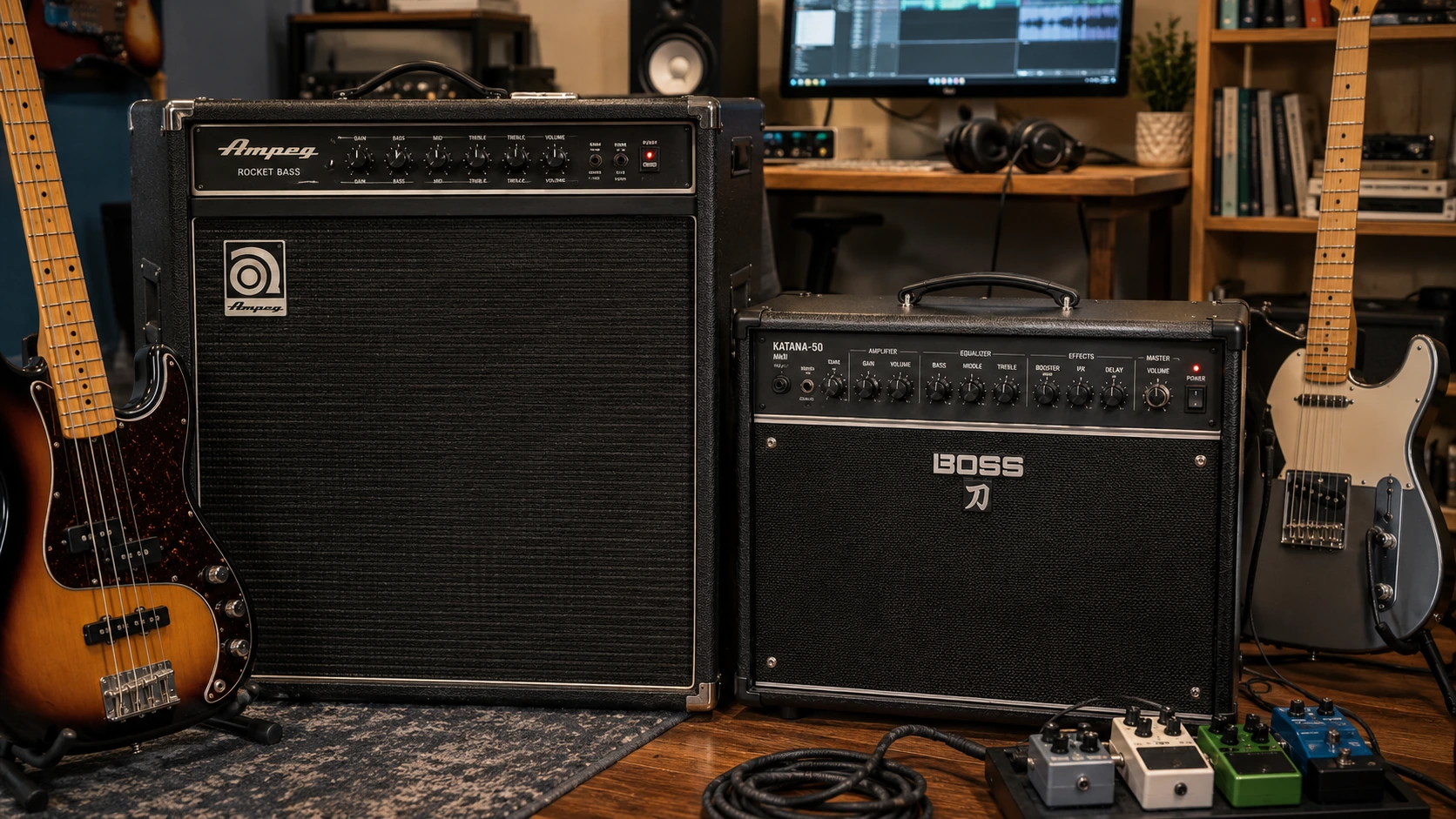
The bass amp vs guitar amp question comes up constantly. A guitarist borrows a bass amp at rehearsal, a bassist arrives without their rig, or a home player wonders whether one amp can cover both.
Short answer: bass amps and guitar amps target different frequency ranges. Using one for the other produces predictable results — some acceptable, some genuinely damaging.
This guide explains what separates the two at a circuit level, what happens in practice when you cross them, and when doing so is acceptable. Players choosing their first amp can find the full range of dedicated guitar options in the best guitar amps under $200 guide.
Quick answer: Playing bass through a guitar amp risks speaker damage — bass frequencies demand more cone excursion than guitar speakers can handle. Playing guitar through a bass amp is generally safe but sounds flat and characterless. Neither is ideal for the other instrument, but guitar through bass amp is the safer direction.