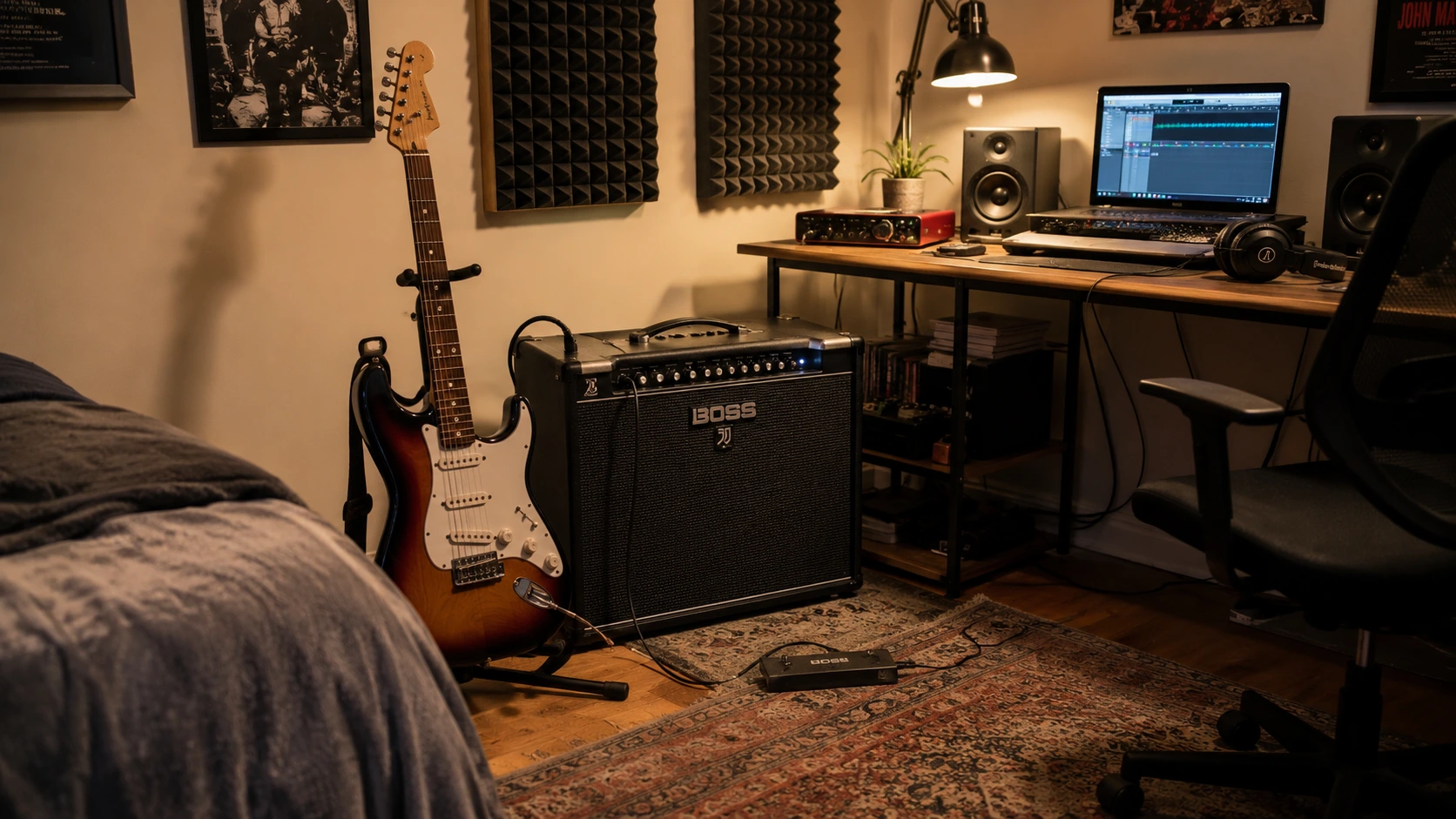
Finding the best guitar amp for home use means solving a specific problem: an amp that sounds good at the volumes a home actually allows. Bedroom walls are thin, neighbours exist, and a 100-watt Marshall half-stack running at stage volume is not the answer. The right home amp delivers genuine tone — clean clarity, convincing overdrive, usable effects — at the volume levels where you actually play. This guide covers five picks that solve that problem at five different price points, from an entry combo to a genuine tube amp for home use.
Every pick here has been chosen because it earns its recommendation at home volumes specifically. That means power attenuation, headphone outputs, built-in effects that remove the need for a separate pedalboard, USB recording capability where relevant, and — critically — tone that doesn’t require cranking to come alive. The complete beginner’s guide to choosing a first guitar amp is in the electric guitar amps for beginners guide.
Quick Answer: The best guitar amp for home use across all budgets are the Fender Frontman 10G (best entry — 13,000+ reviews), Fender Mustang LT25 (best for recording — USB out, 30 amp models), Positive Grid Spark 40 (best smart amp — AI backing tracks, 8,600+ reviews), Boss Katana-50 Gen 3 (best overall — 12 amp characters, power attenuation), and Blackstar HT-1R MkIII (best tube amp — genuine valve tone at 1 watt with headphone out). All five work at bedroom volumes. All include headphone outputs or power attenuation for silent practice.