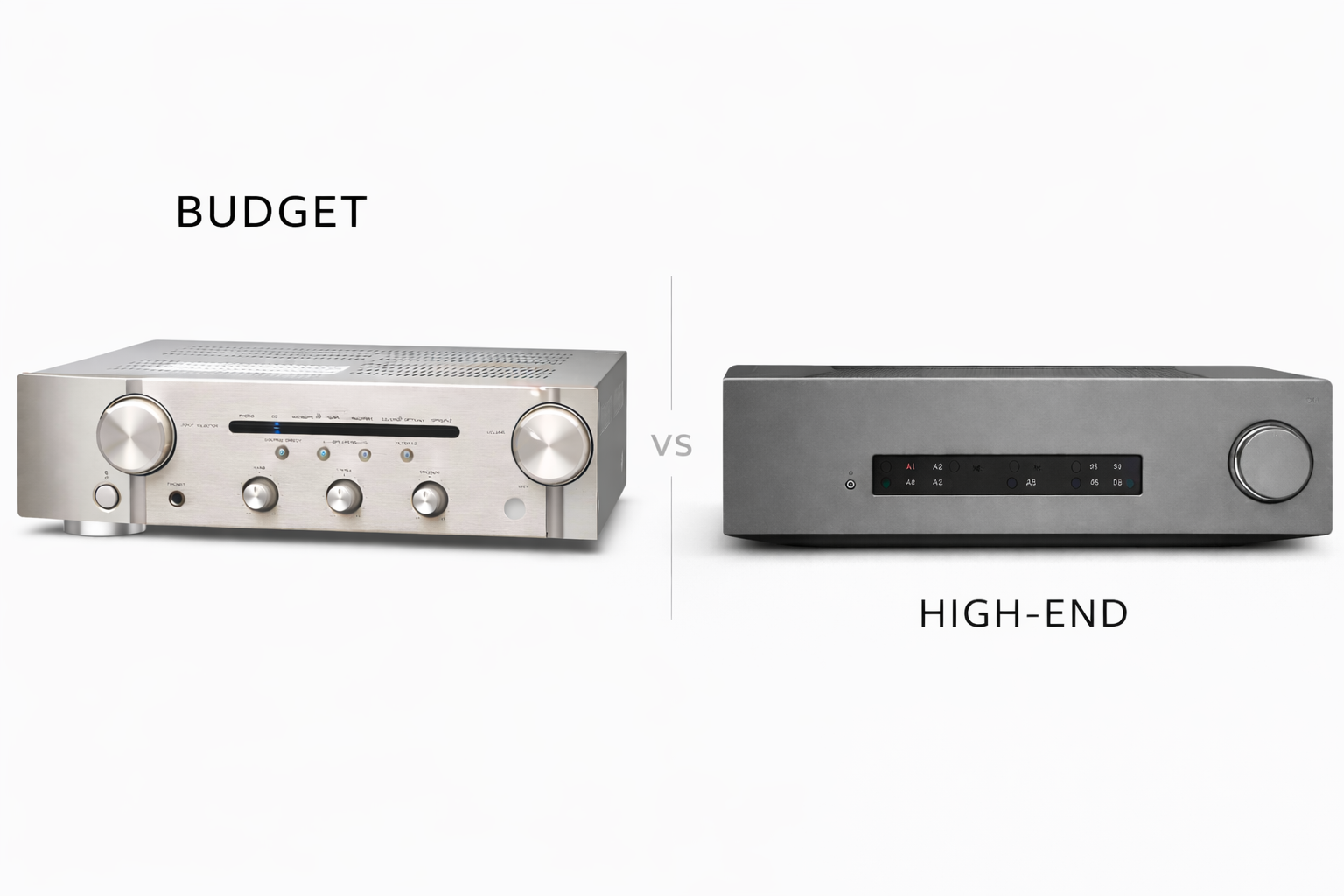
The debate around high end vs budget amplifiers is one of the most confusing topics in home audio. On paper, both categories promise clean power, musical sound, and solid performance — yet the price gap between them can be massive. This often leaves buyers wondering what they are actually paying for, and whether spending more truly delivers better results.
Budget amplifiers have improved dramatically over the past decade. Advances in Class D technology, compact power supplies, and simplified designs allow affordable models to drive speakers that once required much larger and more expensive equipment. At the same time, high-end amplifiers continue to justify their price through engineering choices that focus on long-term stability, power delivery, and system scalability.
This guide breaks down the real differences between high end vs budget amplifiers without marketing hype or brand loyalty. Instead of focusing on price alone, we’ll look at internal design, real-world performance, listening environments, and when each category actually makes sense — so you can choose based on your system, not assumptions.